Find Parts that fit Your Car
Every modified car starts somewhere.
For a lot of enthusiasts, that first step is the intake.
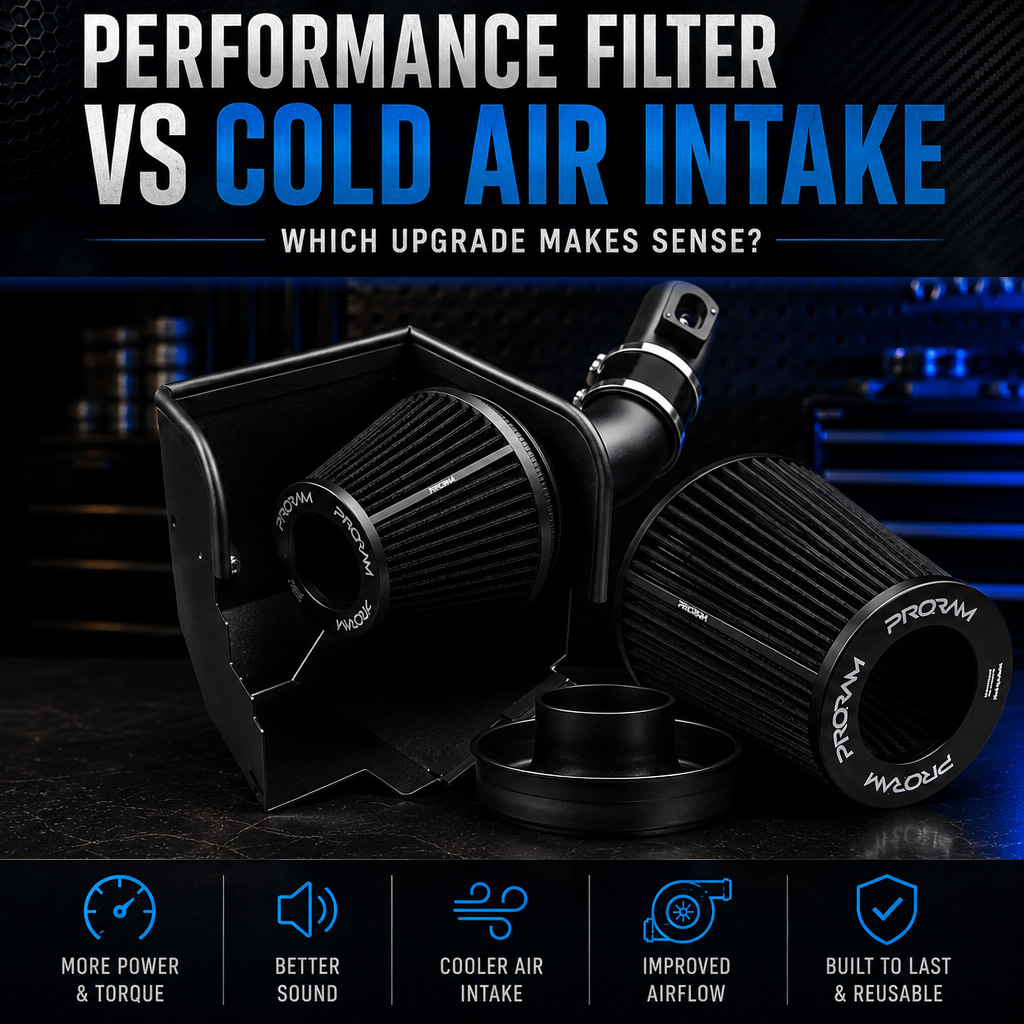
You do not need a tuned engine, upgraded turbo or a long shopping list of performance parts to benefit from better airflow. Replacing the disposable factory air filter with a high-flow performance filter is one of the simplest, cheapest and most proven ways to wake up a standard car.
Then the rabbit hole begins.
Once you add a Stage 1 ECU tune, a complete performance intake becomes one of the most worthwhile bolt-on upgrades you can make. You reduce restriction, give the engine or turbocharger more air, sharpen the character of the car and unlock much more induction sound.
Go further again and the turbo inlet becomes part of the equation. Improve the complete path from the filter to the compressor and you are no longer just changing the filter — you are upgrading the entire pre-turbo airflow system.
So where should you start?
The Simple Upgrade Path
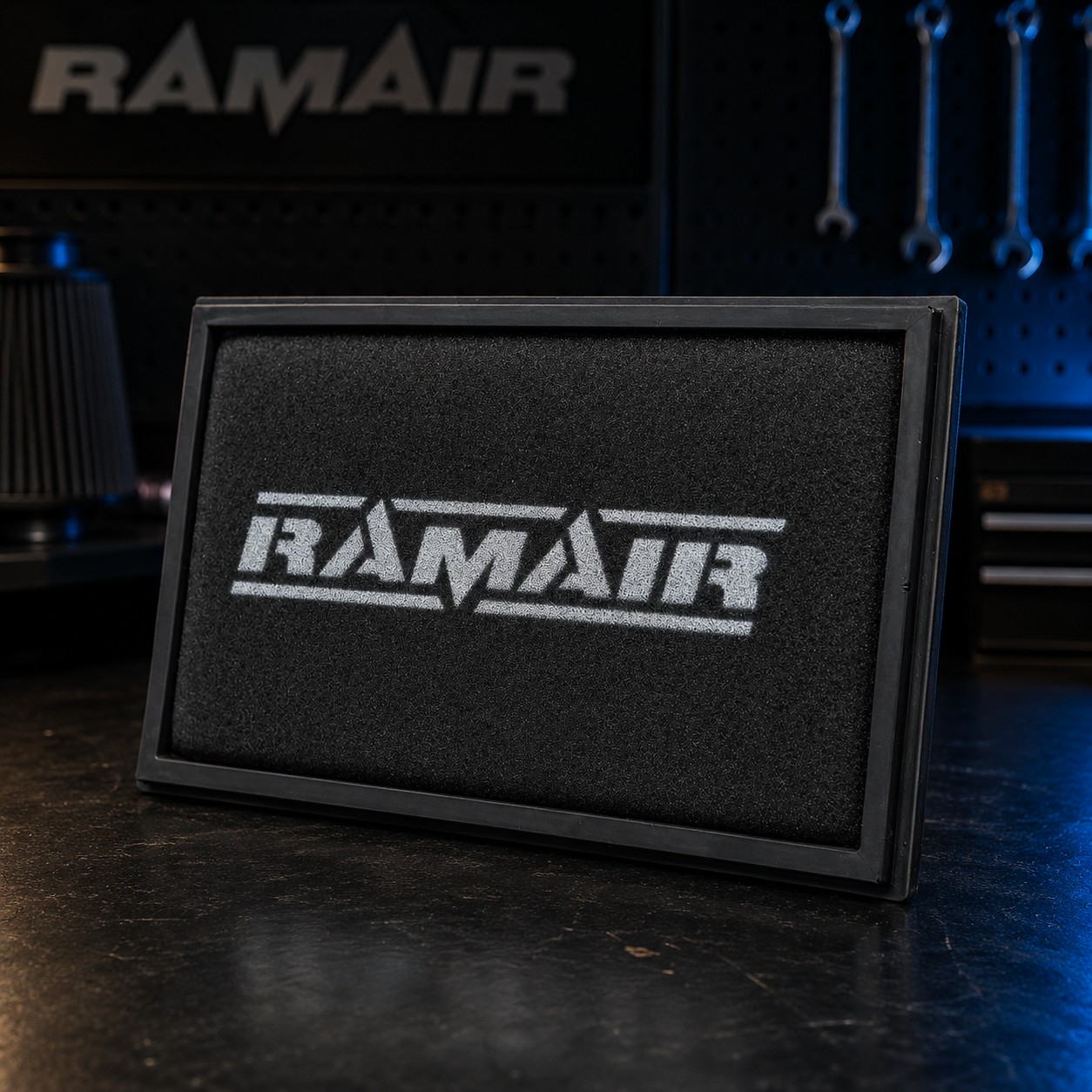
Stock Car
Start with a performance replacement filter.
More airflow, better response, factory fitment and usually a reusable filter that can be cleaned and serviced instead of thrown away.
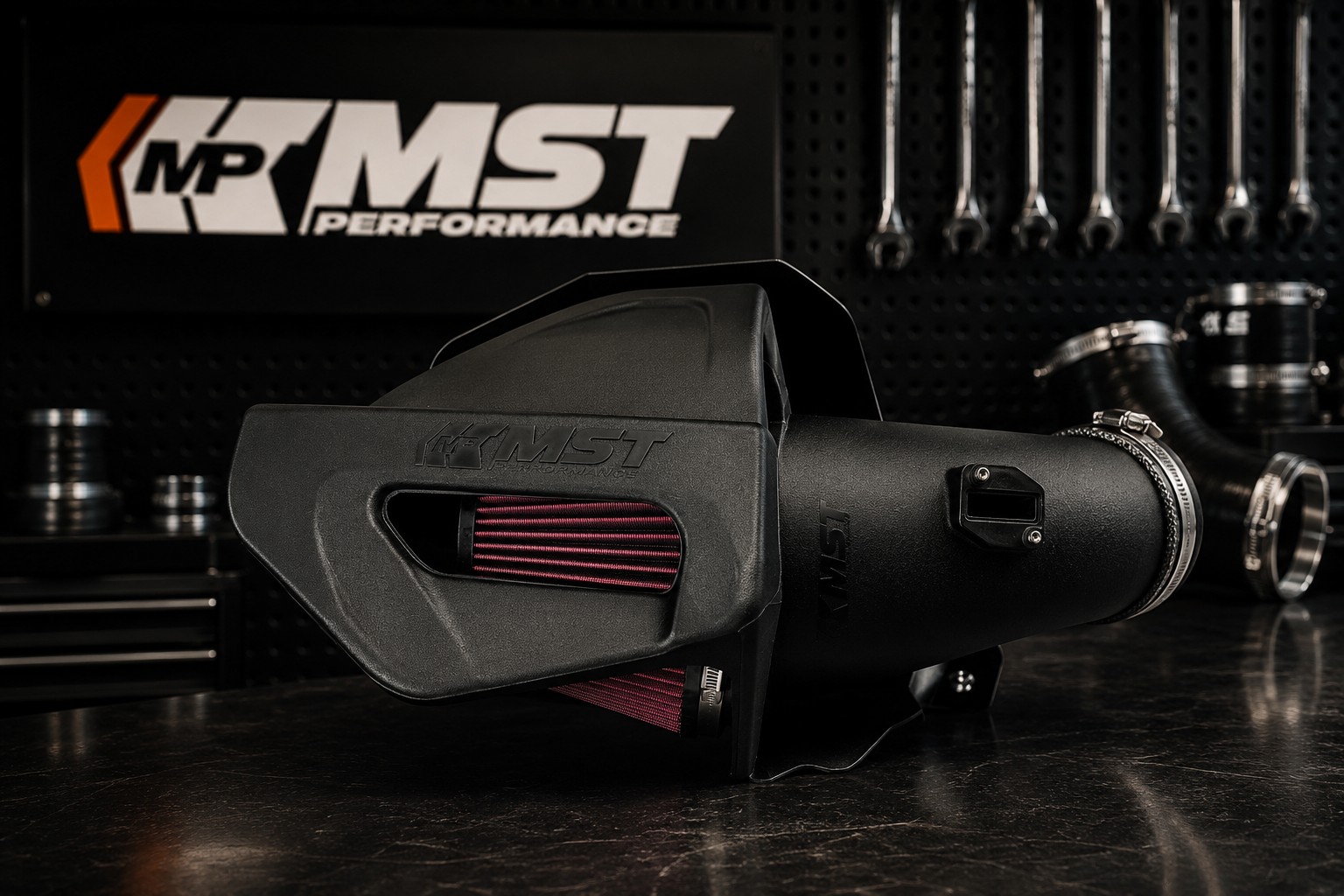
Stage 1 Car
Move up to a complete intake system.
Improve the whole airflow path, reduce restriction, add induction sound and support the extra airflow demand created by ECU tuning.
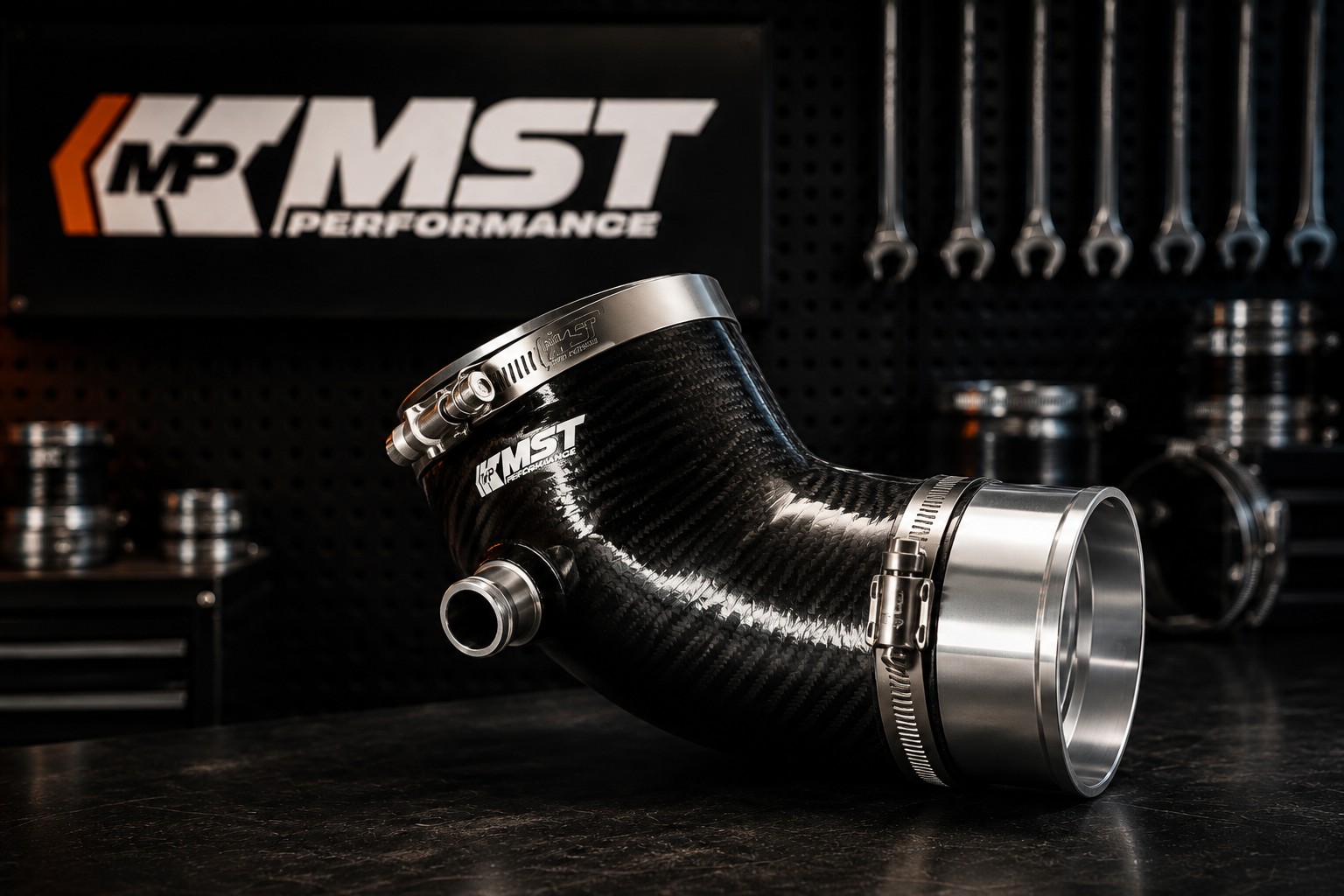
More Power
Upgrade the turbo inlet as well.
Once airflow demand rises, removing restriction immediately before the turbocharger becomes the logical next step.
Start Here: A Performance Air Filter
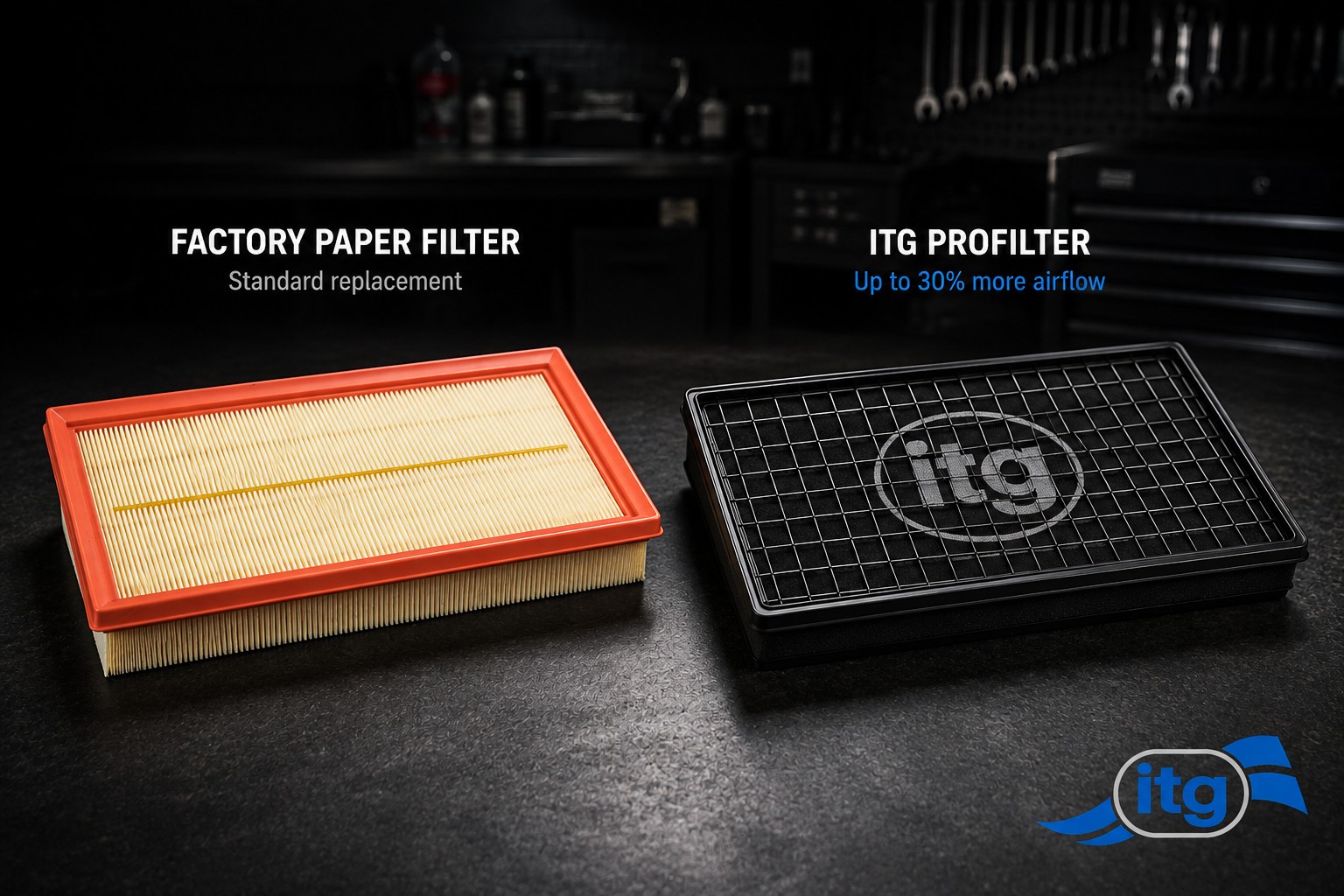
If your car is still standard, this is where we would start.
The factory airbox itself is often very good. Manufacturers spend considerable time developing cold-air feeds, shielding the filter from engine-bay heat and packaging everything neatly into a reliable system.
The standard disposable paper filter is the easy part to improve.
A quality performance replacement filter fits directly into the original airbox but uses a higher-flow filter medium designed to reduce restriction and allow the engine to breathe more freely.
The result is a simple upgrade that can improve airflow and throttle response without changing the rest of the intake system.
Buy It Once, Service It
Another major advantage is that most quality performance filters are designed to be cleaned and reused.
Instead of buying another disposable paper filter every time it reaches the end of its service life, you clean the performance filter according to the manufacturer's instructions and put it back in the car.
For someone planning to keep the vehicle for years, that makes a performance filter even easier to justify.
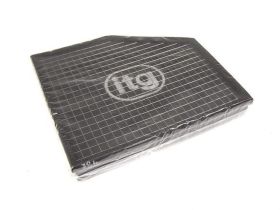
Brands such as ITG and Ramair offer direct-fit filters for a huge range of European vehicles.
Browse Performance Replacement Air Filters
Why This Is Such a Good First Modification
Not every modification needs to cost thousands of dollars.
A performance filter is the kind of upgrade you can make to a completely standard car without committing to a full build. It is easy to fit, relatively inexpensive and does not require replacing the factory airbox or changing the character of the vehicle dramatically.
But it does introduce you to something every enthusiast eventually learns:
small improvements to airflow, response and engine character add up.
Once you start paying attention to how the engine breathes, how quickly the turbo responds and how the car sounds under load, the next upgrade starts making a lot more sense.
Then Comes Stage 1
For many modern turbocharged European cars, a Stage 1 ECU remap is where the car really starts to change.
The calibration increases engine performance by making better use of the hardware already fitted to the vehicle. Boost, fuelling, ignition and torque control can all be optimised within the limits of the standard engine and supporting components.
Once the engine is asking for more air, improving the intake becomes an obvious next step.
A Complete Intake Is More Than a Bigger Filter
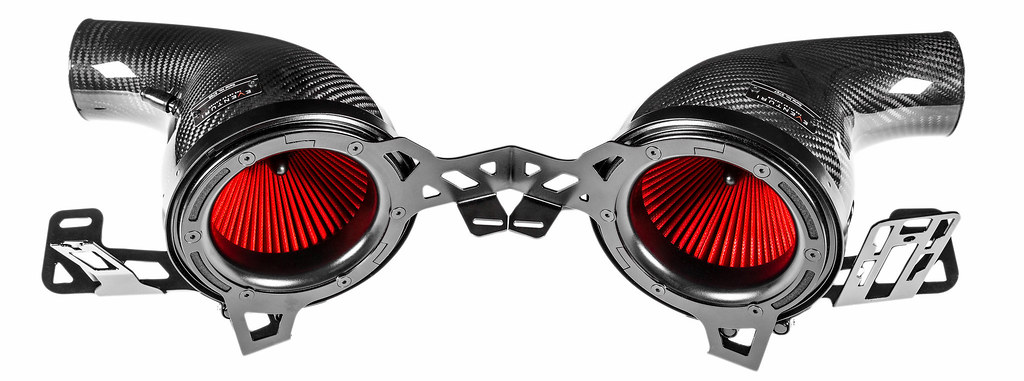
A properly engineered performance intake upgrades much more than the filter element.
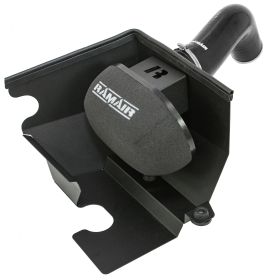
Depending on the design, it can replace restrictive factory pipework, increase filter surface area, improve cold-air delivery, increase internal diameter and create a smoother path into the engine or turbocharger.
Established intake manufacturers test these systems specifically to improve airflow and performance. Many publish flow-bench results, dyno testing and measured power or torque gains for individual applications.
That is exactly why performance intake systems exist.
They are not just cosmetic engine-bay parts. They are designed to move more air with less restriction.
Will a Performance Intake Increase Power?
Yes.
A properly designed performance intake reduces restriction and allows the engine or turbocharger to draw air more efficiently.
Manufacturers such as Eventuri, MST Performance, Ramair and PRORAM develop and test their systems around airflow and performance, with many applications showing measurable improvements in power and torque.
The amount gained depends on the vehicle and its state of tune, but the principle is simple: an engine making more power needs more air, and reducing restriction in front of it helps deliver that air.
And Then There Is the Sound
This is where a full intake becomes addictive.
Modern manufacturers spend a lot of effort making performance cars quiet and refined. Factory airboxes, resonators and enclosed intake pipework suppress a huge amount of mechanical and induction noise.
A performance intake lets some of that character back out.
Depending on the car, you may hear:
- stronger induction roar under acceleration
- turbo spool much more clearly
- compressor noise
- diverter valve operation
- more aggressive engine sound under load
For many enthusiasts, the sound alone makes the upgrade worthwhile.
You press the throttle and suddenly the car feels less like transport and more like something mechanical happening around you.
Stage 1 + Intake + Exhaust: The Classic Combination
If you are just getting into modifying cars, this is the combination you will see again and again for a reason.
ECU tune. Intake. Exhaust.
Each upgrade improves a different part of the package.
ECU Tune
Unlocks more performance from the engine and turbocharger through calibration.
Performance Intake
Improves the airflow path into the engine and adds a much stronger induction character.
Performance Exhaust
Improves the exhaust side of the system and gives the car the sound to match its performance.
On many modern European performance cars, those three upgrades completely transform how the vehicle feels without opening the engine or turning it into an impractical project car.
And this is usually the point where owners stop saying, “I'm only going to do a couple of small mods.”
Open Intake or Enclosed Intake?
Performance intakes come in several different designs.
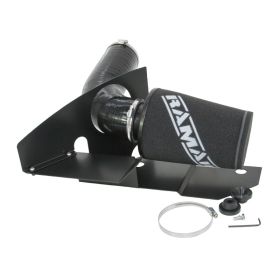
An open intake usually uses a large exposed cone filter together with heat shielding and a cold-air feed. These systems often deliver the strongest induction sound and can provide excellent airflow when properly engineered.
Enclosed systems place the filter inside a sealed or semi-sealed airbox, sometimes using moulded composite or carbon-fibre housings to control temperature and airflow.
Premium systems such as those developed by Eventuri place a huge amount of emphasis on the shape and direction of the airflow path rather than simply fitting a larger filter.
There is no single design that is automatically best for every vehicle.
What matters is that the system has been engineered around the specific engine bay, air supply, sensor arrangement and airflow requirements of the car.
Why Vehicle-Specific Intake Systems Matter
Anyone can bolt a cone filter onto a pipe.
Designing a complete intake properly is different.
A vehicle-specific intake can account for:
- airflow requirements
- filter surface area
- pipe diameter
- MAF or other sensor placement
- engine-bay temperature
- cold-air supply
- turbo inlet diameter
- available engine-bay space
- mounting and vibration
This is why we favour intake systems from established manufacturers rather than treating every filter-on-a-pipe solution as equal.
What About Turbo Inlet Pipes?
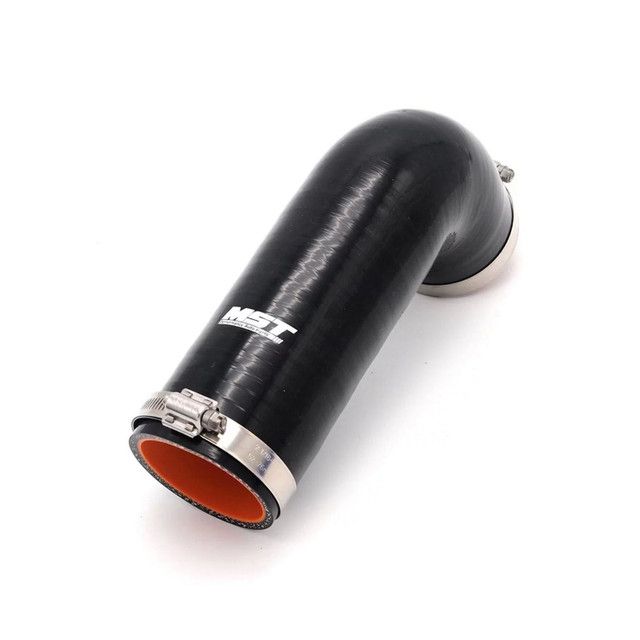
This is where the next stage of the rabbit hole starts.
On a turbocharged engine, the intake does not end at the air filter. Air still has to travel through the inlet pipework before reaching the compressor.
Factory turbo inlet pipes are often constrained by packaging, production cost, noise requirements and the space available around the engine.
A performance turbo inlet pipe is designed to improve this final section of the pre-turbo airflow path.
Depending on the application, this may mean:
- larger internal diameter
- smoother bends
- less restrictive transitions
- better connection to an upgraded intake
- improved airflow into the compressor
As power, boost and airflow demand rise, restrictions before the turbo become increasingly important.
That makes an upgraded turbo inlet a natural companion to a complete intake on tuned vehicles.
Performance Intake Brands We Offer
Ramair
Ramair covers almost the entire intake upgrade path, from direct-fit replacement filters through to complete induction systems and universal filtration products.
PRORAM
PRORAM focuses on high-flow pleated filtration and performance induction systems for popular European vehicles.
ITG
ITG is a strong choice for owners who want to keep the factory airbox and upgrade to a proven performance filter.
MST Performance
MST Performance specialises in complete cold air intake systems and turbo inlet upgrades, making it particularly relevant to tuned turbocharged European cars.
Eventuri
Eventuri sits at the premium end of the market, combining extensive airflow development with carefully engineered carbon-fibre intake systems for high-performance applications.
Browse Performance Intake Systems
What About Universal Air Filters?
Universal filters make sense when you are building something that does not have a suitable vehicle-specific intake available.
They are commonly used for custom intake fabrication, engine conversions, unusual turbo setups and heavily modified cars where the original intake layout no longer applies.
They are available in different diameters, shapes and sizes so the intake can be built around the airflow requirement and available space.
For a normal road car, though, we would choose a dedicated replacement filter or vehicle-specific intake system first whenever one is available.
So What Should You Buy First?
Your Car Is Completely Stock
Buy a performance replacement filter.
It is inexpensive, easy to fit, improves the factory intake and is normally reusable.
It is one of the easiest ways to start modifying the car without changing anything major.
You Have Stage 1 or Plan to Tune the Car
Buy a complete performance intake.
This is where improving airflow really starts to become part of the performance package.
You gain better breathing, stronger induction sound and an intake system designed to support increased airflow demand.
You Want to Go Beyond Stage 1
Look at the intake and turbo inlet together.
Once boost and airflow demand increase further, improving the complete route into the compressor becomes increasingly worthwhile.
You Are Building Something Custom
Start with a quality universal filter and design the intake around it.
This gives you control over diameter, placement and overall airflow path.
The Rabbit Hole Is the Fun Part
A performance filter might be the first part you fit.
Then you start thinking about the intake.
Then the ECU tune.
Then the exhaust.
Then the intercooler.
Then you notice the turbo inlet.
Before long, the car that was “staying standard” has become a much faster, louder and more interesting version of itself.
That is exactly why modifying cars is addictive.
You do not need to build everything at once. Start with the upgrade that makes sense for the car today, enjoy the difference, and build from there.
Frequently Asked Questions
Is a performance air filter worth fitting to a stock car?
Yes. A performance replacement filter is one of the easiest and most affordable upgrades for a standard car. It improves airflow while retaining the factory airbox, and most quality performance filters can be cleaned and reused instead of being replaced like a disposable paper filter.
Will a performance intake increase power?
Yes. A properly designed performance intake reduces restriction and allows the engine or turbocharger to draw air more efficiently. Established manufacturers such as Eventuri, MST Performance, Ramair and PRORAM test their systems for airflow and performance, with many publishing measured power and torque gains for specific applications.
Do I need a performance intake for Stage 1?
Not every Stage 1 calibration requires an upgraded intake, but it is one of the best supporting bolt-on modifications to add. A performance intake improves airflow, adds induction sound and gives the engine or turbocharger greater breathing capacity as performance demand increases.
Does a cold air intake make the car louder?
Yes. A performance intake usually makes induction and turbocharger sounds much more noticeable. Depending on the vehicle, you may hear stronger intake roar, turbo spool, compressor noise and diverter valve operation that the factory intake normally suppresses.
Is an open cone intake better than the factory airbox?
A properly engineered open intake can provide excellent airflow and strong induction sound, but simply fitting a cone filter is not the same as installing a complete performance intake. Heat shielding, cold-air supply, pipe diameter, sensor placement and overall airflow design all matter.
When should I upgrade the turbo inlet pipe?
A turbo inlet upgrade makes particular sense once the car is tuned and airflow demand has increased. Improving the pipework directly before the compressor reduces another source of restriction and complements a high-flow intake system.
Can performance air filters be cleaned and reused?
Most quality performance filters are designed to be serviceable and reusable. Follow the cleaning and maintenance procedure specified by the filter manufacturer, as the correct method depends on the filter material and construction.
-

VW Amarok Performance Silicone Air Intake Turbo Pipe CAI Cold Air Intake Kit
Special Price $135.00 Regular Price $200.00