Find Parts that fit Your Car
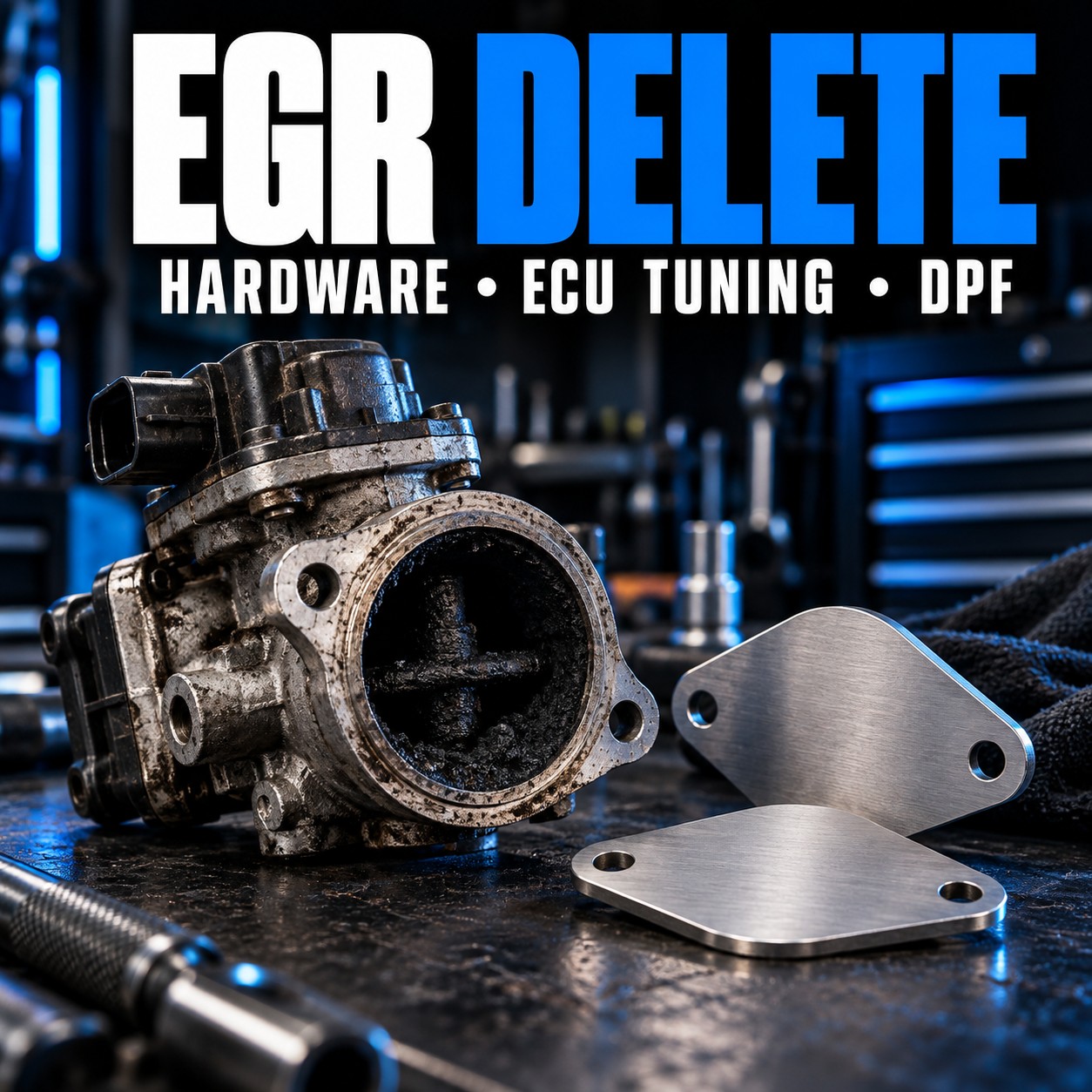
What does an EGR delete involve?
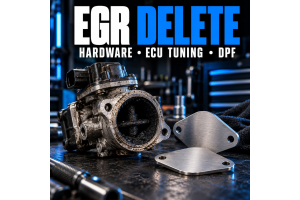
An EGR delete stops exhaust gas being recirculated into the engine's intake. The job can involve blanking plates, a replacement pipe or a complete cooler-delete kit, together with ECU software changes to suit the revised setup.
These products do different jobs. A plate closes an exhaust-gas passage; a cooler kit deals with additional hardware and coolant connections. Choosing the right combination avoids buying a basic plate when the actual problem is a leaking cooler.
Shop EGR Blanking Plates & Delete Kits
Why does the engine recirculate exhaust gas?
EGR stands for Exhaust Gas Recirculation. The valve meters exhaust gas into the incoming air to reduce peak combustion temperature and the formation of nitrogen oxides, or NOx. An EGR cooler transfers heat from that exhaust gas into the engine's coolant before it returns to the intake.
The downside is contamination. Soot carried through the EGR circuit combines with oil mist in the intake, creating deposits around the valve and intake passages. As these accumulate, the valve can stick and the available air passage can narrow. Later systems may use both high-pressure and low-pressure EGR circuits; their hardware and exhaust take-off points differ.
Blanking plate, race pipe or cooler-delete kit?
- EGR blanking plate: blocks the relevant gas passage while much of the original assembly may remain fitted. It does not repair a cracked cooler.
- EGR replacement or race pipe: replaces a valve housing or section of the intake on supported engines. Connections, diameter and mounting arrangement must match the original installation.
- EGR cooler-delete or bypass kit: provides the parts needed to remove or isolate the specified cooler arrangement, including coolant connections where the kit design requires them.
Choose by engine code and EGR assembly, not just vehicle badge. Our range includes Amarok 2.0 TDI cooler-delete kits, BMW N47/N47S cooler kits and BMW M47/M57 replacement pipes.
What benefits can an EGR delete provide?
The main attraction is reducing the source of EGR-related intake fouling and removing the relevant failure-prone hardware from the setup.
- Less EGR-related intake contamination: stopping the recirculated exhaust supply reduces the soot entering through that circuit.
- Elimination of the removed component's failure point: a deleted valve cannot stick again, and a removed cooler cannot develop another internal coolant leak.
- Recovered response and driveability: resolving an EGR fault that was upsetting airflow can restore smooth running and lost performance.
- A simpler installation: a complete kit can remove redundant EGR pipework and assemblies where the engine layout allows it.
Expect the biggest improvement when the original system was already causing a problem. Extra power and fuel-economy changes depend on the engine's condition and calibration. Existing intake deposits still need cleaning; switching EGR off does not remove them.
Faults that point towards the EGR system
A sticking valve can cause uneven idle, hesitation, poor response or reduced power. An engine-management warning or limp mode may accompany the fault. Common diagnostic descriptions include:
- P0401: insufficient EGR flow.
- P0402: excessive EGR flow.
- P0403: EGR control-circuit or valve-actuation fault.
A leaking cooler presents differently: unexplained coolant loss, sometimes with white exhaust vapour or poor running. Coolant can leak internally without leaving an obvious puddle. Pressure-testing the cooling system and checking the cooler helps identify the source.
Read the full fault description and supporting data before ordering. A wiring fault, blocked passage and failed actuator need different attention. Our guide to reading diagnostic fault codes explains where to start.
Why the ECU software matters
On electronically monitored engines, fitting a plate does not complete the job. The ECU may still command EGR flow and detect that the expected airflow change is missing, even when the valve remains plugged in. Removing the electrical connection can introduce additional faults.
The software must suit the hardware configuration. Clearing the warning or hiding a fault code alone does not establish that the engine controls are working correctly. Tell us which parts are being changed and whether the DPF is staying so we can assess the required ECU work.
Can you delete EGR and keep the DPF?
There is no universal rule that an EGR delete requires DPF removal. Volkswagen's Self-Study Programme 336 describes switching EGR off during active regeneration to raise combustion temperature. Exhaust recirculation is therefore not an essential part of every regeneration process.
Keeping the DPF still requires a compatible engine-control strategy. Filter monitoring, temperature control and regeneration must remain operational. Related components matter too: Volkswagen's EA288 training material states that an intake-throttle failure prevents active regeneration on the system described.
Assess DPF retention against the specific engine, ECU and proposed hardware changes. A warning-free dashboard alone does not confirm successful regeneration. Retaining a filter also means retaining its maintenance needs; an EGR modification will not empty an already restricted DPF.
Get the hardware and ECU work matched
Send us the vehicle model, engine code, existing fault codes and details of the intended setup. Include whether the DPF is staying and whether the problem involves the valve, cooler or both. We can then help identify the appropriate parts and assess the ECU remap.
Explore our Upgrade Knowledge Hub for more diesel, diagnostic and performance guides.
EGR delete FAQs
Is an EGR blanking plate enough on its own?
On electronically monitored engines, matching ECU changes are normally required. The plate changes gas flow but does not change what the ECU commands or expects to measure.
Will an EGR delete clean the inlet manifold?
No. It reduces the EGR contribution to future deposits. Existing carbon and oily build-up remain until physically cleaned. This service is available here: Full preventive intake cleaning service
Will switching EGR off fix a leaking cooler?
No. Software cannot seal a coolant leak. The damaged cooler needs a mechanical solution; select the cooler kit rather than assuming a valve blanking plate covers it.
Does EGR removal make the engine run cooler?
Not as a general rule. EGR reduces peak combustion temperature. Intake temperature, coolant temperature and exhaust temperature are different measurements, so “lower engine temperatures” is not a reliable blanket benefit.
Is DPF removal automatically part of an EGR delete?
No. They are separate changes. If you intend to keep the DPF, make that part of the ECU assessment from the outset.
Can the EGR work be combined with a performance remap?
Yes. Ask us to assess both together. Include your current modifications and performance goals in the ECU tuning enquiry so the quotation covers the intended setup.
Legal-use note: EGR-delete hardware and software are intended for competition applications where permitted. Removing or disabling emissions equipment can make a vehicle illegal for road use. The owner is responsible for ensuring the vehicle's use complies with applicable laws; off-road use is not an automatic exemption.
-
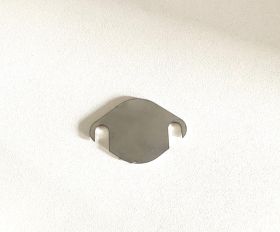
VW Audi 2.7 TDI 3.0 TDI EGR blanking plate VW EGR Delete
Special Price $15.00 Regular Price $33.00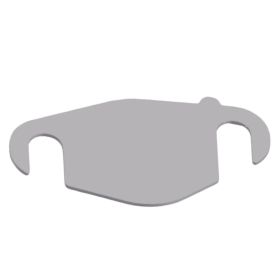
Nissan Navara NP300 2.3L D23 EGR blanking plate delete remove block off
Special Price $11.00 Regular Price $45.00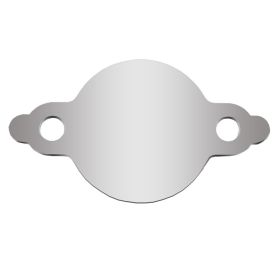
Nissan Navara D22 D40 2.5L YD25 Patrol GU ZD30 Euro 4 Common Rail EGR blanking plate
Special Price $11.00 Regular Price $55.00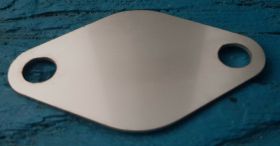
Holden Rodeo 4JH1 3.0L Turbo Diesel EGR Blanking Plate delete remove block off
Special Price $11.00 Regular Price $40.00